Saturday, March 28, 2020

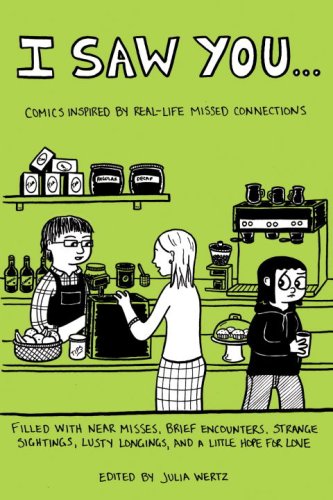
Comics for Strange Times: I Saw You (on CraigList, obviously)

A couple of years ago, I stumbled upon the `Missed Connection` section of New York City CraigList and I kept returning regularly for a couple of months. What an unique source of inspiration about our world of relationships, hopes and expectations - as well as creepiness - it is! The dream of seeing someone who is the one and only person only for a couple of seconds! The hope that he or she will see the announcement, but also the fear that one might be in fact stalked by a crazy one obsessivelly believing that they are meant for each other.
At certain extents, it reminded me of two of my high-school girlfriends who spotted some random dude on their way home and obsessed about him for weeks and weeks in a row. God forbid to see him again...Funnily, they never made anything else than eye contact.
CraigList announcements were therefore offering unique insights into the dating, communications and relationship psyche in the new millenium. Do you feel the desperate call of a line like this: ´I kept looking for you but I couldn´t find you anywhere´?
When I´ve seen there is a full comics inspired and dedicated by those some notes, it couldn´t wait to have it. I Saw You is a collection of graphic notes edited by cartoonist Julia Wertz who is also a contributor about people searching for people. In a less tragical note, similarly with the notes dropped in the newspapers after the end of WWII when people were looking for survivor relatives, friends or spouses.
As a collective work, not all the notes are equal from the point of view of the topics and style. Some notes are funny, some are hilarious, some are creepy, and some are borderline stalking behavior. Some drawings are really good, some not so impressive. But this diversity is the diversity of the ads as well and the diversity of the people that hope that CraigList might help them get in touch with a person they assume might be special for them.
I personally find very interesting the topic of the collection, a mundane yet inspiring topic to explore for the genre of comics. Now, I´m curious if there are other literary and non-literary works dedicated to such issues. What about real time stories, about people that actually met and fell in love like is no tomorrow by answering an anonymous call on CraigList? Or maybe a thriller about an unhappy situation...Should I check CraigList again? What does the ´social distancing´ issue to the already tangled web of curious and strange 21st style relationships?

Rating: 3 stars

Thursday, March 26, 2020

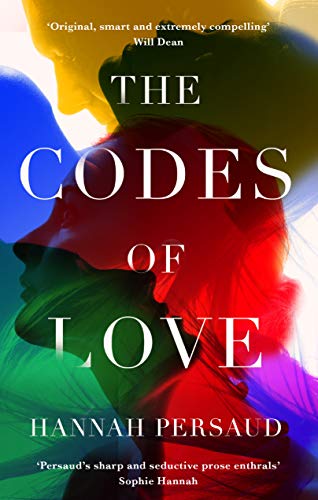
Blog Tour: The Codes of Love by Hannah Persaud

There are rules of love, languages of love and codes of love. Everything turns around the magical word ´love´ but it might have different meanings and stir different associations for each and every single human involved in the process of love as such. We associate to love either social conventions - marriage, partnership - or strong feelings and commitments - honesty, openness. We want love to last, at least as long as a fairy tale, and when we, or one of us is out of love, we are heartbroken, a phenomenon which can be describe accurately in anatomical/medical terms.
Hannah Persaud debut novel The Codes of Love opens with a quote from Kahlil Gibran, On Marriage: `Love one another, but make not a bond of love: let it rather be a moving sea between the shores of your soul`. What is the bond about, actually? Being committed legally - through marriage - with shared bank account, the same family name, a mortgage? Depending on one another physically? Requesting absolute fidelity? Living for and through one another? How can you trace the map of your heart adding other people to the chart, but without keeping them against their own will.
Ada - Ryan - Emily are part of a triangle in the making. Dominated by an aggressive father, Ryan married the adventurous Emily as his first love. In their early 40s, he´s a successful architect, she´s teaching literature, they have two teenage soons and the secret of an open marriage. Emily´s idea, never fully accepted by Ryan. Emily and Ryan do have different needs that time did not change: she´s more sexual, he is more on the  intellectual committed side. The fact that their marriage relies on an apparently stable set of rules, translating easily into codes made of fine everyday agreements does not protect any of them from the final countdown of the failure. In fact, it is the failure of a convention that gives further life to (probably) just another code (of love).
This is what we are witnessing in The Codes of Love: the end of a marriage that might make many envious, where physical trepassings are accepted in the name of an out-of-time commitment and mutual respect. For Ryan, who´s suddenly having a committed adventure with the independent and never committed Ada, Emily´s code of love was frustrating as he will openly tell her in one of their fights: ´Did you ever feel guilty for the pain you caused me as I watched you gallivating around?´ On the other hand, Emily suspects Ryan is having more than an adventure and is becoming unsecure and jealous - wasn´t it one of her rules to not sleep more than once with someone? Between Ryan and Emily the code of love is becoming a game of lies and a nasty display of power. Apparently, there are some limits to the open canvas of their marriage. The relationship erodes ´layer by layer, like rust´.
On her side, Ada is playing her own independent game: manipulating more or less consciously both of them, never losing herself. She´s excited about the unexpected and the adventure, but once she and Ryan are buying a cottage in Wales, there is no more excitement and the adventure has no present.
What the intricacies of the relationships setting and unsettling in The Codes of Love reveals for me is the confusing multiplicity of commitments that never set for one, in fact: the commitment for an emancipated life - as Emily looks back to her relationship choices she said ´I´m just pushing for the same freedom that men have claimed for years´ - the commitment of independence, the commitment of adventure, the commitment of monogamy, the commitment of intellect overriding the instinctual desires. Each and every one of this commitments are breaking apart in million little pieces, and out of the shards new love paths are created, not necessarily code-bounded. 
The writing flows in an uncomplicated way, like the lines of a building on the architect´s chart. Besides the three main characters, the other protagonists of the story are rather episodic and without a defined personality (for instance, I would have been curious to delve a little bit more into Emily´s sister story). The natural environment recreated - the Wales setting - suits perfectly the inner wildnerness of the characters. 
The cover deserves a special mention, for the excellent visual rendition of the story.

Disclaimer: Book offered by the publisher in exchange for an honest review

Rating: 4 stars

Tuesday, March 24, 2020

YA Book Review: Love, Hate&Other Filters by Samira Ahmed

I haven´t read such an insightful YA multicultural novel in a long time. Samira Ahmed´s Love, Hate&Other Filters encompasses with an original voice a clear message about what does it mean to grow up different in nowadays America.
Daughter of immigrants from a Muslim Indian family, Maya Aziz is struggling to write her own story: as a teen, woman, Muslim American, as an individual. She is a couple of months shy of her 18th birthday and the pressures of all kinds are entering her life: her parents - that come with nothing and succeeded to set up a relatively successfully dental practice in Batavia, Illinois - can´t wait to dance to her wedding and already started to tour suitable candidates; it´s time to apply to universities and her passion for film seems to be stronger than the expectations of her parents; she is in love for ever with Phil, that she knows since she was 5, but he is not suitable as a husband material and in addition he is also taken. Maya moves smoothly from a world to another, having non-Muslim friends and coping pretty well with the American melting pot. However, she is born different and this difference is reminded a couple of times every day, from her skin colour to the smell on her clothes because of the ingredients traditionally used to cook in the household. Her parents moved oceans to achieve their current American life, but their adherence to all the cultural norms and standards and self-obliteration is not achievable. Take, for instance, the fact that non-wed young Muslim couples do not kiss before marriage: `The no kiss is anticlimatic, but some taboos cross oceans, packed tightly into the corners of the immigrant baggage, tucked away with packets of masala and memories of home`.
Maya´s biggest struggle is to find the royal path towards a life she wants and fulfills her as a human being, while still being a good daughter. Maybe in a similar with her rebel aunt, in her 40s, not married, a graphic designer enjoying her creativity and freedom. Without acknowledging her parents, Maya applies and is accepted at the NYU for Film studies as her filming ´is the way I see things. Really see them. I can capture what is important to me at a particular moment. That way, I keep it forever´. Which means that she had to leave her parents home and start the life of adventures, in Thoreau´s words she quoted ´suck the marrow out of life´. But announcing such a radical decision involves complex sensitivities and difficult episodes with her parents. ´There are things I love about it. My friends. This place. But I want to be in New York already. You know, a place where I can life and do what I want and not be the Indian girl or the Muslim girl. A place where I can just be´.
Maya´s family Muslim identity appears as a given, connecting the members through the threats of tradition and shared identity: they do not eat pork or drink, but also don´t necessarily go to the mosque all the time and pray strictly five times the day.
At first, everything looks like a cinematically organised sequence of life snaps from the life of a teenage gang in Batavia, Illinois dating, dealing with their family constraints and their burgeoning identity of new adults in the making. But there is another terrible story that rolls in the background, the story of an unhappy young boy that lured by the white supremacist ideas will commit a terrorist attack. First, it was labelled as a Muslim terrorist attack, as among the name of a victims, a certain Aziz - the same family name like Maya´s - was found. Followingly, Maya´s innocence is facing the assault by an aggressive colleague. This is the rotten worm of the beautiful American dream since September 11, revealed as Maya was praying that the perpetrator is not Muslim: ´I´m scared of being the object of fear and loathing and suspicion again. Always´. The Muslim ban and the additional screenings in airports of non-white people, said Maya, ´left American Muslims to fight for their Americanness and their beliefs´. But there is still hope for her; when overwhelmed by the situation, her parents were considering maybe returning back to India, it is the same Maya who is trying to convince them that America is their place: ´Yes, terrible racist stuff happened, but we´re part of this place, and it´s a part of us. And we can help make it better by being here and living our lives and being happy. We can be...We are American and Indian and Muslim´.
The story in itself is full of hope, with delicate twists and change of situation, slow paced yet keeping the reader alert for the new installment. The audience is mostly YA, but it also shows to a larger audience a specific way of understanding and stating identity in America nowadays. In an interview, the author herself who is living in Batavia, Illinois, experienced racism as a little girl therefore the accents of authenticity in the voices of the characters. The characters are authentic not only when they utter realities related to their ethnic and/or religious identity but also as voices of teenage children and adults in the making.
The construction of the story and the ways in which the relationships between the characters develop is another plus of the book; it offers a multiplicity of perspectives and projects the unique voices and personalities of the characters.
Love, Hate&Other Filters by Samira Ahmed is one of those books whose reading is important in those dramatic times for the ethnic relationships in America we are in. As told and seen through the voices and eyes of teenagers, it makes the entire message more relevant because it gives the measure of the struggle for being free enough for writing your own story. That story that´s only yours to live and tell it further.

Rating: 4 stars
Sunday, March 15, 2020

A Spy Adventurous Graphic Novel: Lena´s Odyssey

From the villas of the former communist leadership in Eastern Berlin to Aleppo, Lena is on a bizarre mission that in the end we find out it has to do with the peace process in the Middle East. The suspense of the graphic novel has to do less with the aims, but with the ways in which the mysterious story unfolds: we have to follow Lena and her strange way to contact people in as diverse places as Romania, Hungary, Turkey, Ukraine or Syria, who are given unusual presents - marzipan chocolate, shaving kit, expensive perfume. Sounds very intriguing, isn´t it? You should wait until the very end of the story to figure out how those extraordinary gifts will be in fact used.
The suspense is all around and will continue until the very end of the story. Because Lena has in fact a different name and her personal history hence her presence into this story is more complicated than one of a adventurous globetrotter. Her Odyssey, revealed step-by-step is what keeps you reading this exceptional graphic novel in one sitting. It has the right combination between inspired graphics - by André Juillard - and the literary setting - by Pierre Christin - which for me makes the reading of such a genre as valuable as any other kind of literary product.
The book was originally published in French, but I´ve read the English translation.

Rating: 5 stars
Disclaimer: Book offered by the publisher in exchange for an honest review

Blog Tour: The Waxwork Corpse by Simon Michael


Set in England of the 1950s-1960s, The Waxwork Corpse by Simon Michael is a slow paced classical legal thriller yet with many unexpected twists. 


Personally, I prefer novels set in our very recent times, except for some historical novels, but the ways in which the spirit of the old times is inserted into the story in this book are so smooth that one doesn´t need extra documentation or a long time journey. The historical part, which goes as far as the 1940s, during the bombing of London by the Germans is used as a useful background but there are no historical specificities besides the specific context as such.
The story in itself is catching and once I started to read the book I`ve refused to let it down. There were many reasons for that: the writing, the characters, the story in itself that although it has a certain degree of predictability it has unexpected emotional twists revealing hidden human truth, the construction of the story in itself, with its more than one layer of development. Do not expect The Waxwork Corpse to be a reading packed with action and activities and corpses every 2 pages. There is only one corpse whose life and encounters are reconstructed based on the testimonies of people close to her, but the person who did the murder is apparently known from the very beginning.  
Charles Holborne, formerly Horowitz, a former boxer with a shady past, an unusual yet respected barrister, is prosecuting another barrister whose wife, disappeared for over 10 years, was finally discovered in the Lake District. That wife was a nasty unbearable aggressive character herself it seems, and probably the barrister acted in self defense, but why it took so long to recognize the murder and why he hid evidences for so long? The final answer will be known only in the end, and it is a surprising one, although following the logic of the story, without a spectacular turn of situation. The barrister will be declared ´not guilty´ although his career will be over anyway.
In parallel with the legal thriller, there is a personal story involving Holborne´s relationship with his Jewish heritage and his family in general which is going on, which in relationship with the thriller development itself gives an unique perspective on the bonding between fathers and sons as well.
The story is based on a real case and the author himself, Simon Michael, was a barrister for 37 years with experience in defending a very diverse category of culprits.
The Waxwork Corpse is the 5th from the Charles Holborne published by Sapere Books. For me, it was the first encounter with this unusual barrister and the fact that I haven´t read previous books from the series did not influence the understanding of the current book. However, I realized that I love the writing so much that I may be interested in exploring more of Holborne´s adventures.

Disclaimer: The book was generously offered to be by Sapere Books in exchange for an honest review, but the opinions are, as usual, my own.

Saturday, March 14, 2020

Short Stories by Catalin Dorian Florescu

I remember exactly the moment when I`ve heard about Catalin Dorian Florescu for the first time. I used to work as a journalist at the time and one of my colleagues, a passionate German-language reader and learner, which I was not at all, mentioned it passionatelly, outlining his story. Originary from Romania, Florescu used to have a career as a bus driver in Switzerland while writing in his free time. Despite his success, he kept his job, probably as a good source of human information for his stories.
And his fame only get bigger, with more and more books being written and more accolades and prizes being received. Still, it took me over ten years to finally find the proper mood for his works. It might be also because I am always a bit careful, reluctant and distant when it comes to books inspired by and written by authors from the old country. I am not impressed by nostalgic images, mythified memories about the communist times and that attitude that ´in fact, there were also some good things about those communist times though´ (which makes sense from the human point of view and I admit it with my logical/rational part of the brain but don´t want to delve into the dramatic discussion about it).
A couple of weeks ago, I stucked from my local library a couple of books of Florescu, and started to know him through his collection of short stories. The language was fine for me, but he belongs to the Swiss cousins and whose variant of German is often ridiculized. I am not a native therefore I cannot judge the beauty and accuracy of the language, and among my native German friends no one is bibliophile enough to spend reading a Swiss author of Romanian origin in order to evaluate the accuracy. But I have a big doubt that for the natives, those writing in a German taught as a second language are never good enough. Once I had the impression that even bilinguals are not good enough, as a German friend of mine confessed that the way in which Herta MĂ¼ller, the recipient of Nobel Prize in Literature on behalf of...Germany, writes is not always ´how things are really said in the old German`.
Going further into the content, I entered a world of people at the edge, my favorite kind of people. Immigrants, or locals estranged from life, strange situations and unusual changes, as in the case of the account of the beautiful German island of Sylt suddenly ´invaded´ by Syrian refugees and the reaction of the people used to live in the most expensive part of Germany. The settings as diverse: a border area in Romania, Switzerland, Germany, and the pace of the story shares a lot with the banality of the everyday life. Not the set of events matters, but the ways in which people react to life, their personalities. The stories are told with a quiet, monotone voice, in a way that makes you forget about relative time and geographic limitations, the story flows in its natural realism, then it stops and another one follows. It´s by far one of my favorite way to tell short stories. 
I really loved to observe the characters in their failed humanity, and their strength as literary appearances made me very curious to explore a novel by Catalin Dorian Florescu. Which will happen in a couple of days.

Rating: 4 stars

Monday, March 9, 2020

Book Review: Celestial Bodies by Jokha Alharthi

The first book written in Arabic winning the International Booker Prize, Celestial Bodies by Jokha Alharthi is a multi-layered story of three generations living in Oman. The book was translated into English by Marilyn Booth, Arabic expert at the University of Oxford.
On a micro-society level, the book - built on testimonies of different characters - covers a multitude of aspects: recent history of Oman, the family and social changes underwent in a relatively short amount of time, the slavery heritage, marriage rituals, growing self awareness of women.
'Literature have to be honest', the author said in a recent interview with Hindustan Times, and the characters from Celestial Bodies are unexpectedly open when sharing the intimacy of their stories. The main women protagonists - Mayya, Asma and Khawla - represent three different personalities within the patriarchal system and their interpretations of love and marriage commitment. Their projections of womanhood may differ as their social roles and status are different, but they display a diverse view of gender roles. The identity of women remain strongly connected to the masculine authority, itself on the move. The toxic aggressive masculinity some of the men in the story grew up with it's turning against them and affects on long term their own relationships with both their spouses and children. 
The world of women is defined and delineated by men and their absence or disappearance may represent a new beginning, like in the case of Najiya, the bedouin woman: 'Her father's death came as a relief. Now she could truly consolidate her authority over her life, her property and her freedom'. And then there are the many stories of the slaves only recently liberated whose voices are screaming high in the sky: 'We are free. They stole us, and then they sold us! he would scream in the middle of the night, at dawn, in the zar exorcisms: Free! They did us wrong, they destroyed us. Free!'.
I've personally got so much attracted by this book for the unique appeal: it reveals about a country I am not very familiar with by curious to learn out more. Therefore, I might have paid less critical attention to the literary aspects. However, after reading over half of the book could not ignore some important aspects: the timelines of some of the personal stories are confusing and the ullulating of the proverb-maker does not always bring new knowledge to the story; the individual stories themselves are not always matching together puzzle-wise, and not all the voices of the characters are equally heard.
The world described in Celestial Bodies is closed to most of us, but through books and literary encounters we are shared, although imperfectly, fragments of this world. I wish there will be more books by Omani writers, including by Jokha Alharthi, soon.

Rating: 3.5 stars